
How to Prevent Etching on Marble Countertops (and What to Do If It Happens)
Etching Is Not a Stain
An etch is a dull, light mark left when acid reacts with the calcium in marble, quartzite with calcium content, and other natural stones. Lemon juice, vinegar, tomato, wine, and many cleaners can etch in seconds. Unlike a stain, an etch is a tiny change to the surface finish itself — which is why wiping harder doesn’t fix it.
The Everyday Habits That Prevent Etching
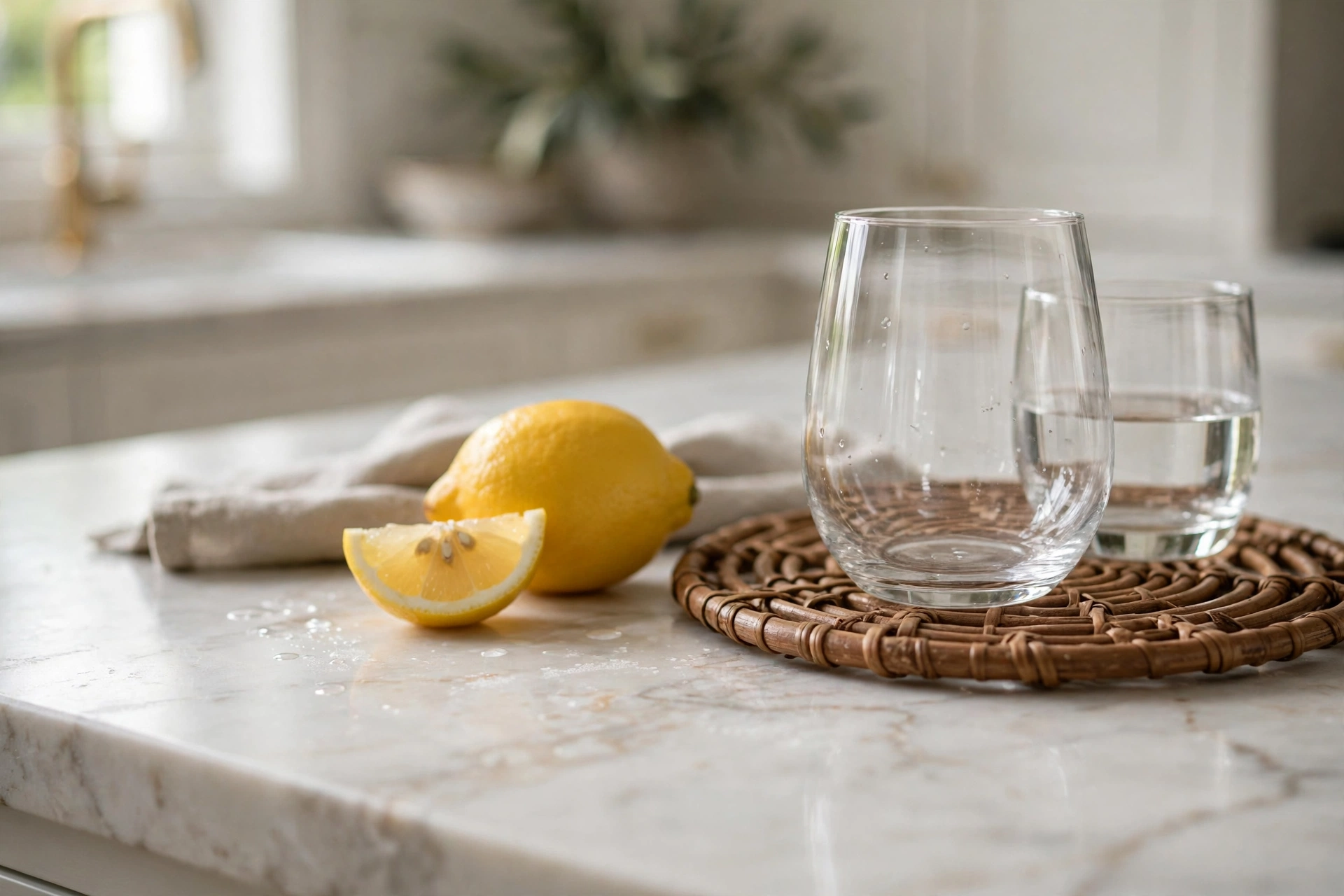
Use coasters under drinks, trivets and boards for prep, and wipe up acidic spills right away. Keep a cutting board between citrus and the counter, set bottles on trays in bathrooms, and choose pH-neutral cleaners made for stone. These small habits prevent most etches entirely.
What Sealer Does — and Doesn’t Do
Sealer helps marble resist absorbing stains, and we recommend keeping marble sealed on schedule. But no standard sealer fully stops acid etching, because etching happens on contact at the surface. Anyone who promises an etch-proof marble is overselling — honest expectations are part of choosing marble well.
Finish Choices That Hide Etching
A honed (matte) finish makes light etch marks far less visible than a high-polish finish, which is why many busy kitchens choose honed marble. If you love marble’s look but worry about upkeep, ask us about marble-look quartz — it gives the veining without the etching risk.
If Your Marble Is Already Etched
Light etches on polished marble can sometimes be improved with marble polishing powder made for homeowners, used exactly as directed. Deeper or widespread etching needs professional re-honing or polishing. Don’t use vinegar, lemon, or generic “stain removers” — they will make it worse.
Love marble and want it to stay beautiful? Royal Granite Creations in Powder Springs, GA can help you choose the right finish and care plan. Call (678) 653-7101 to talk through your options or schedule a visit.