
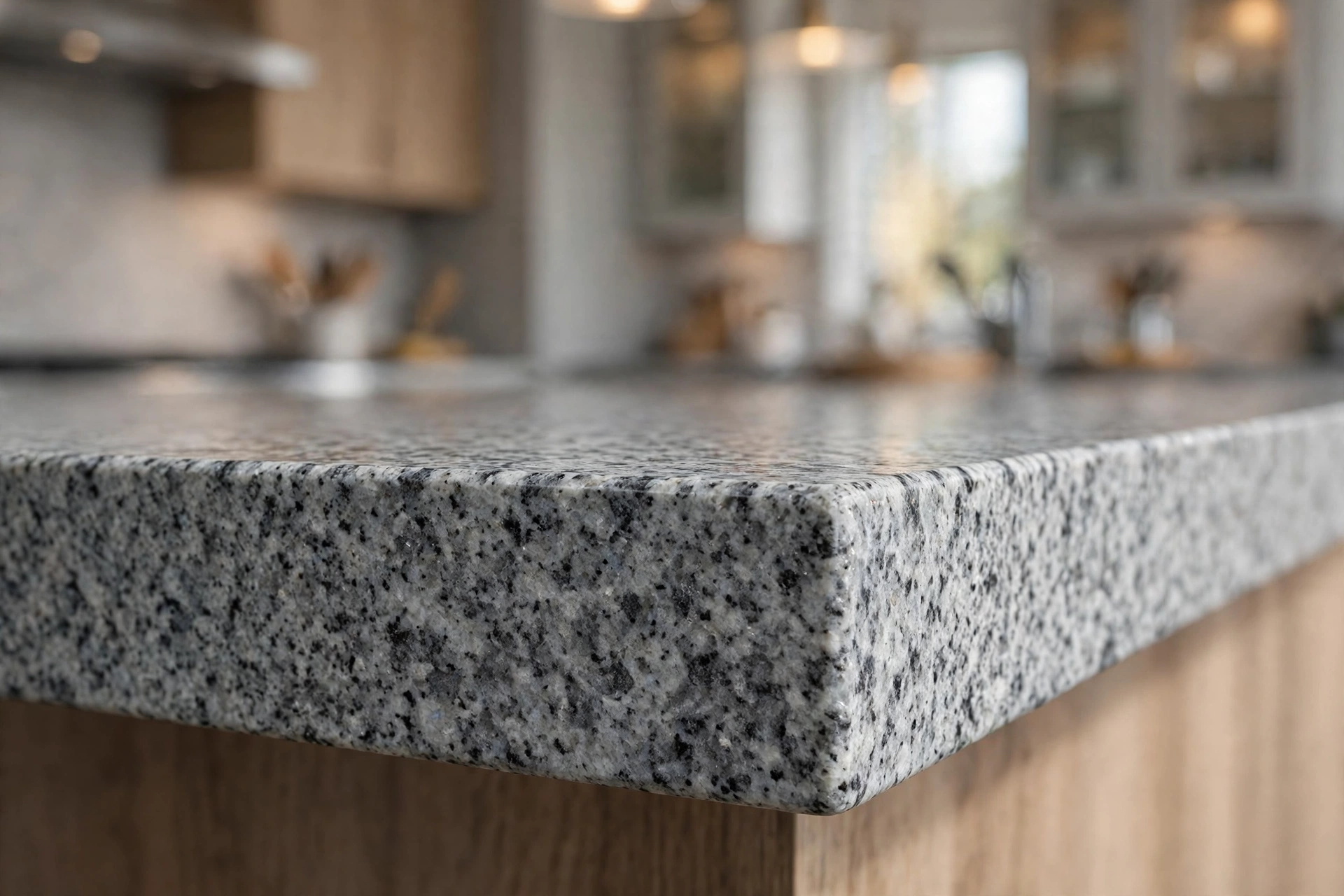
Countertop Thickness Guide: 2cm vs. 3cm Granite and Quartz Explained
What 2cm and 3cm Actually Mean
Stone slabs commonly come in 2cm (about 3/4 inch) and 3cm (about 1-1/4 inch) thicknesses. Both are real, durable countertop materials — the difference is in strength, appearance, edge options, and how the countertop is built and supported.
Strength and Support
3cm stone is stronger on its own and can span cabinets and dishwasher openings with less additional support. 2cm stone is often installed over a plywood sub-top, which adds support and is standard practice when done correctly. For long overhangs and islands, either thickness needs proper corbels or brackets — we’ll calculate that during templating.
The Look: Slim and Modern vs. Bold and Substantial
2cm with a mitered edge can create a sleek, modern, thick-looking island while keeping weight down. 3cm gives a naturally substantial, premium feel and shows off bold edge profiles like ogee and full bullnose beautifully. Neither looks “cheaper” when the edge is chosen well.
Edge Profiles and Thickness
Some detailed edges need the height that 3cm provides, while simple eased and bevel edges work on both. If you have your heart set on a specific edge, tell us early — it can guide the thickness choice for your granite, quartz, quartzite, or marble slab.
Cost Differences
3cm material usually costs more per square foot and weighs more, which affects handling. 2cm can save on material but may add sub-top labor. Total installed cost is closer than most people expect, so choose based on look, span, and edge — then let us price both honestly.
Not sure which thickness fits your kitchen? Bring your layout or photos to Royal Granite Creations in Powder Springs, GA, and we’ll walk you through real samples. Call (678) 653-7101 for a free quote.