
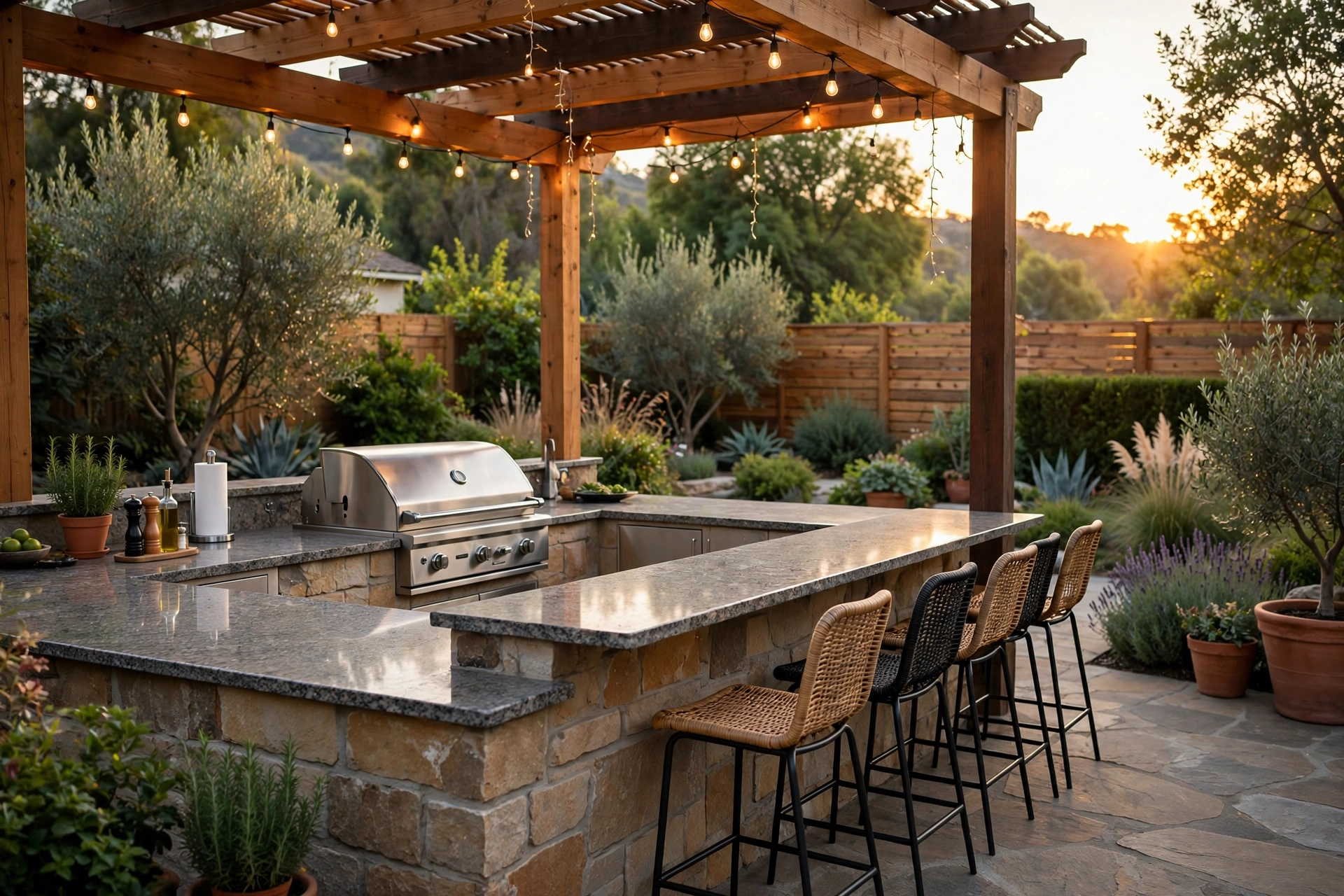
Can Granite Countertops Go Outside? An Outdoor Kitchen Guide
Outdoor kitchens are one of the biggest backyard trends in Metro Atlanta, and the first question most homeowners ask us is the same one: can granite really hold up outside, year after year, through sun, rain, and Georgia winters? The short answer is yes — granite is one of the best stones you can put outdoors. But not every stone makes the cut, and the ones that do need a slightly different game plan than your indoor counters.
Why Granite Works So Well Outside
Granite is an igneous rock — formed under intense heat and pressure deep in the earth. That origin gives it three qualities that matter enormously outdoors:
UV stability. Unlike engineered materials, granite’s color comes from minerals, not dyes or resins. It won’t fade, yellow, or chalk in direct sunlight. A granite countertop will look the same in year ten as it did on install day, sun and all.
Freeze-thaw resistance. Granite barely absorbs water when properly sealed, which matters in winter. Stone cracks when water soaks into its pores and then expands as it freezes. Dense, well-sealed granite shrugs off Georgia’s freeze-thaw cycles.
Heat tolerance. Next to a grill, pizza oven, or smoker, surfaces get hot. Granite handles radiant heat far better than most alternatives — though you should still set ripping-hot items on trivets rather than directly on the stone.
The Outdoor Stone Scorecard: What to Use, What to Avoid
Great choices:
- Granite — the gold standard for outdoor counters. Durable, sun-stable, freeze-resistant.
- Quartzite — just as tough as granite, with the elegant veining marble lovers crave. Equally UV-stable. A premium outdoor choice.
Use with caution:
- Marble — technically you can use it outside, but we don’t recommend it. Marble etches in rain (rainwater is mildly acidic), stains easily under a tree canopy, and develops patina fast outdoors. If you love the look, quartzite gives you marble’s beauty with outdoor durability.
Do not use:
- Engineered quartz — this is the big one. Quartz countertops are about 93% stone bound together with polymer resins, and those resins are not UV-stable. In direct sun, quartz yellows, warps, and can eventually fail. Manufacturers specifically void warranties for outdoor use. Keep quartz inside.
Choosing Colors and Thickness
Color matters more outdoors. Dark granites (blacks, deep browns) absorb solar heat and can get uncomfortably hot to the touch in a Georgia July — think of them like a dark car dashboard. Light and medium tones (whites, grays, golds, Santa Cecelia-style patterns) stay noticeably cooler and show less dust and pollen. If your outdoor kitchen sits in full sun, lean light.
Thickness: 3 cm (about 1.25 inches) is the standard and works fine outdoors. If you want a chunkier look, a mitered or laminated edge gives the appearance of 2-inch-plus thickness without the weight and cost of full-thick slab.
Exterior-Grade Sealing (Non-Negotiable)
Indoor granite gets sealed every 1–3 years. Outdoors, plan on resealing once a year, ideally each spring before grilling season. Use a premium exterior-grade penetrating sealer rated for UV exposure — standard indoor sealers break down faster in sun and rain.
Apply it the same way you would indoors:
- Clean the stone and let it dry completely (a full sunny day is ideal).
- Apply the sealer evenly with a clean cloth or foam applicator.
- Let it penetrate for the time the product specifies — usually 5–15 minutes.
- Buff off any excess before it hazes.
- Let it cure 24 hours before heavy use or rain.
Between sealings, do the water test every few months: sprinkle water on the surface. Beading means you’re protected; soaking in means it’s time to reseal early.
Maintenance in the Elements
- Wipe down after storms. Leaves, pollen, and standing water won’t damage sealed granite, but organic debris left for weeks can encourage staining or mildew in the pores around the edges.
- Clean with pH-neutral soap and water — same as indoors. Never use vinegar, bleach, or acidic outdoor cleaners on natural stone; they attack the sealer.
- Watch the grill zone. Grease splatter from a grill is the number-one outdoor staining risk. Wipe the area around the grill after cooking, and consider a dedicated grease-resistant mat under the grill itself.
- Bird droppings: remove them promptly. They’re acidic and will etch sealer if left to bake in the sun.
Design Tips for a Kitchen That Lasts
Overhangs and coverage matter. A pergola, roof, or even a generous bar overhang protects the stone from the worst of sun and rain and extends sealer life dramatically. You don’t need a full enclosure — partial shade makes a real difference.
Mind the grill placement. Leave at least 12–18 inches of stone between your grill and any wall or post. Radiant heat discolors sealers over time, and you want airflow. If you’re building in a grill, leave expansion room — stone and metal expand at different rates.
Winter covering. Georgia winters are mild, but if you’re not using the kitchen from December to February, a breathable outdoor cover keeps pollen, leaves, and ice off the stone. Avoid trapping moisture — use covers designed for outdoor kitchens, not plastic tarps pressed flat against the surface.
Sink and plumbing: if your outdoor kitchen has a sink, winterize the plumbing before the first hard freeze. The stone will be fine; the pipes won’t.
The Bottom Line
Granite and quartzite are genuinely outdoor stones — sun-proof, freeze-proof, and grill-proof with basic care. Marble and engineered quartz aren’t. Choose a lighter color, seal annually with an exterior-grade product, and give the stone a little shade, and your outdoor kitchen will outlast the appliances around it.
Thinking about an outdoor kitchen? Royal Granite Creations designs, fabricates, and installs granite, quartz, quartzite, and marble countertops across Metro Atlanta from our Powder Springs shop — outdoor projects included. Call (678) 653-7101 for a free estimate.