
How to Seal Granite Countertops: A Step-by-Step Guide for Metro Atlanta Homeowners
Why Sealing Matters
Granite is naturally porous. Without a quality sealer, spills like red wine, coffee, and cooking oil can soak into the stone and leave permanent stains. Sealing fills those microscopic pores, giving you time to wipe up spills before they become problems. It does not make granite stain-proof — but it makes it stain-resistant.
How to Tell If Your Granite Needs Sealing
Try the water test: sprinkle a few drops of water on your countertop and wait 10–15 minutes. If the water beads up, your sealer is still working. If it soaks in and darkens the stone, it is time to reseal. Most Atlanta kitchens need resealing every 1–3 years depending on the stone and how heavily the kitchen is used.
What You’ll Need
- pH-neutral stone cleaner
- Soft cloths or microfiber towels
- High-quality penetrating granite sealer (available at home improvement stores)
- Rubber gloves
- Good ventilation
Step-by-Step: How to Seal Granite Countertops
Step 1: Clean thoroughly. Wipe the entire surface with pH-neutral stone cleaner and let it dry completely — at least 30 minutes. Never use vinegar, bleach, or abrasive cleaners on natural stone.
Step 2: Test in a small area. Apply sealer to an inconspicuous spot first to make sure you like the result. Sealer should not change the color of your granite.
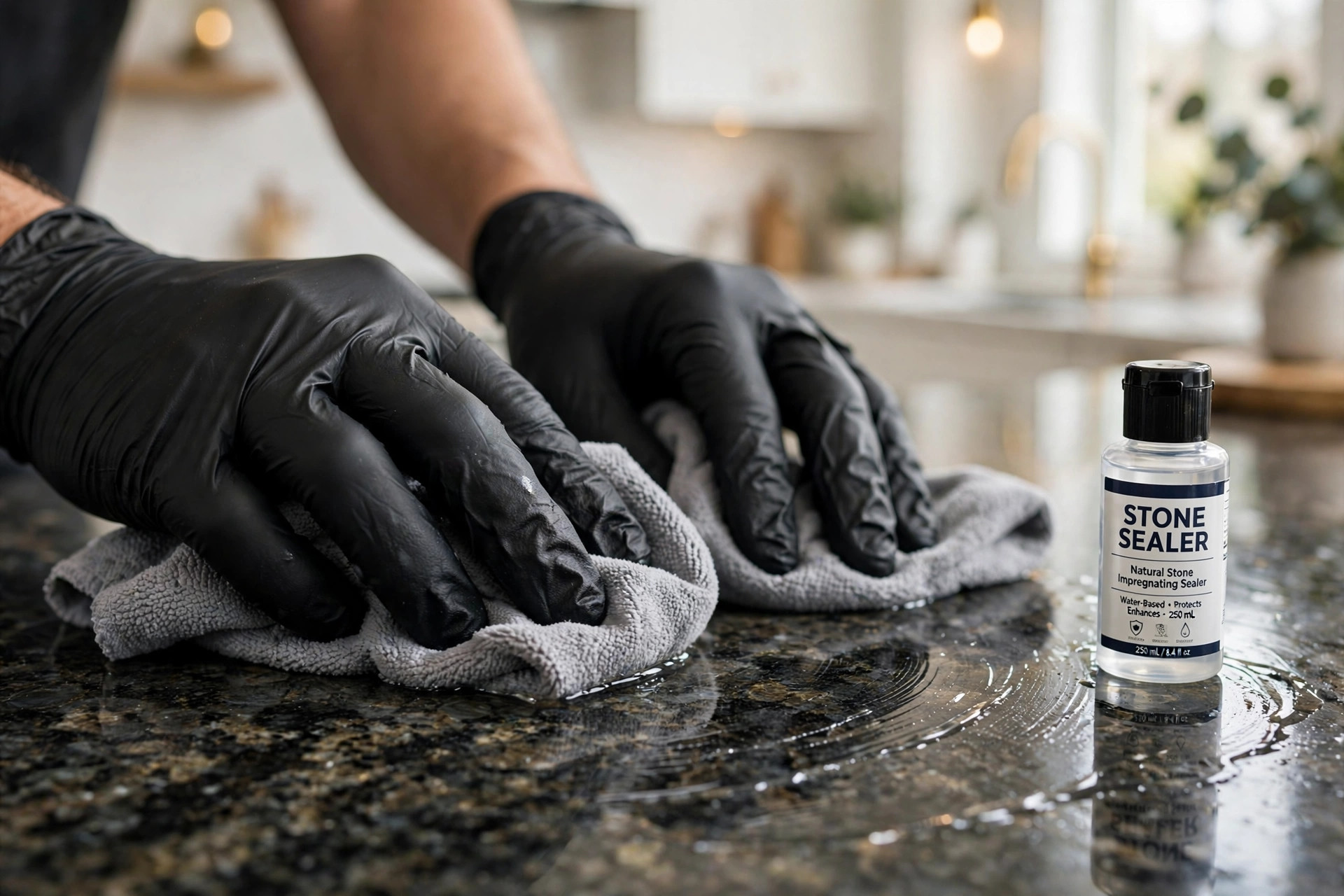
Step 3: Apply the sealer. Wearing gloves, apply an even coat with a soft cloth, working in small sections. Most penetrating sealers need 5–15 minutes to absorb — check your product’s instructions.
Step 4: Wipe off the excess. Before the sealer dries on the surface, buff off any excess with a clean, dry cloth. Leftover sealer that dries on top creates a hazy film.
Step 5: Let it cure. Keep the surface dry for 24 hours (some products require 48–72 hours for full cure). Avoid placing anything on the counters during this time.
Step 6: Test again. Repeat the water test. If water still soaks in, apply a second coat.
Common Mistakes to Avoid
- Sealing over a dirty countertop — this traps grime under the sealer
- Using too much product — thin, even coats work best
- Skipping the cure time — using the counter too soon weakens protection
- Using the wrong cleaner afterward — stick with pH-neutral stone cleaners, never vinegar or bleach
When to Call a Professional
If your granite has deep stains, etching, or dull spots that cleaning and sealing do not fix, a professional stone restoration may be needed. At Royal Granite Creations, we’ve fabricated and installed granite, quartz, quartzite, and marble countertops across Metro Atlanta since 2015. Call (678) 653-7101 for a free estimate.